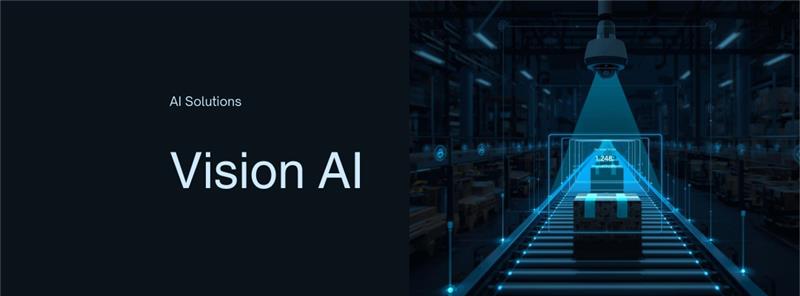
Struggling with manual package counting errors that slow down your Indian supply chain and cost thousands in rework? Inaccurate tallies plague 70% of manufacturing facilities, leading to delays and losses. This article ranks the top Vision AI solutions, like AegisVision sub-10ms edge deployment, to help you pick the perfect one for fast, precise parcel inspection.
Introduction to Automated Package Counting with Vision AI
Manual inventory checks are the silent killer of supply chain efficiency. When you rely on clipboards and human eyes to count thousands of packages moving across a conveyor belt, errors happen. A missed scan here or a double-count there eventually leads to inventory shrinkage and shipping disputes.
Automated package counting changes the equation. By using cameras and intelligent software, businesses can track inventory in real-time without stopping the line. This isn't just about speed; it is about creating a digital record of truth for every item that enters or leaves your facility. As of 2026, modern systems can achieve accuracy rates above 99.9%, far surpassing human capabilities.
What Is Automated Package Counting Using Vision AI?
Automated package counting is the application of computer vision to logistics and manufacturing lines. Unlike simple photoelectric sensors that just break a beam to count an object, vision AI "sees" the product. It uses deep learning algorithms to identify what the object is, verify its condition, and count it simultaneously.
This technology distinguishes between different package types, such as boxes, polybags, or pallets. It can even ignore non-product debris that might trigger a traditional sensor. The system captures video frames, analyzes them in milliseconds, and updates your warehouse management system (WMS) instantly. It is the difference between guessing your throughput and knowing it with certainty.
How Vision AI Enables Parcel Counting, Sorting, and Inspection
The process combines industrial hardware with sophisticated software models. It moves beyond simple pixel matching and uses neural networks trained on thousands of images to understand what a "package" looks like in various conditions.
Core Components of the System
A functional system requires three main elements working together. First, you need image acquisition hardware, which includes industrial cameras and specialized lighting to ensure clear visibility. Second, you need an edge computing device (like an NVIDIA Jetson) to process data locally without lag. Finally, the AI model acts as the brain, interpreting the visual data.
"The most expensive camera is useless without the right lighting. Shadows are the enemy of AI accuracy."
Step-by-Step Detection and Counting Process
Here is how the magic happens on the line:
Capture: As a package passes a trigger point, the camera snaps high-resolution frames.
Inference: The AI model analyzes the image to detect object boundaries (bounding boxes).
Tracking: The software assigns a unique ID to the object to prevent double-counting as it moves across frames.
Logging: The count and image evidence are sent to the central database.
Key Benefits for Supply Chain and Manufacturing in India
India's logistics and manufacturing sectors are experiencing massive volume growth. With this surge comes the challenge of scaling operations without letting quality slip. For facilities in hubs like Mumbai, Delhi, or Chennai, relying on manual labor for counting is becoming unsustainable due to rising wages and the sheer speed of modern production lines.
Why this matters for Indian industry:
Throughput Speed: AI systems operate 24/7 without fatigue, matching the speed of high-velocity conveyors.
Dispute Resolution: You get visual proof of every shipment, reducing claims from distributors or customers.
Space Optimization: Automated systems require less physical space than manual checking stations.
Data Accuracy: Removing human error prevents stockouts and overstocking situations.
Top Picks: Vision AI Solutions Compared and Ranked
Choosing the right partner depends on your specific volume, budget, and technical requirements. Here is how the top players stack up.
1. AegisVision.ai – Best Overall for Speed and Edge Deployment
AegisVision takes the top spot for its focus on speed and ease of use. It is designed specifically as a SaaS platform that integrates directly into production lines with sub-10ms inference speeds. This is critical for high-speed bottling or packaging lines where every millisecond counts.
The platform stands out because of its self-learning models. You do not need a team of data scientists to train it; the system adapts to new package types quickly. With deployments in over 70 facilities, it offers a proven balance of enterprise-grade reliability and flexible edge-to-cloud intelligence.
2. Cognex – Top for High-Volume Precision and Hardware Integration
Cognex is a giant in the machine vision space. They are the go-to choice if you need a highly integrated hardware-software ecosystem. Their In-Sight series cameras and VisionPro software are industry standards for a reason.
However, Cognex systems can be complex to set up. They often require specialized engineers to configure and maintain. If you have a rigid production line that rarely changes and you have the budget for premium hardware, Cognex offers incredible precision. It is less flexible than modern SaaS options but extremely reliable for fixed tasks.
3. Jidoka Technologies – Ideal for Indian Manufacturers and Custom Inspections
Based in Chennai, Jidoka Technologies has carved a niche in the Indian market. They specialize in automating visual defects and counting for the automotive and pharmaceutical sectors.
Their strength lies in customization. Jidoka builds tailored solutions that address specific pain points, such as counting small automotive parts or checking blister packs. While they may not have the global plug-and-play scale of a SaaS platform, their hands-on approach is valuable for manufacturers with unique, non-standard counting needs.
Other Strong Contenders: SwitchOn, Viso.ai, and Landing AI
The market is crowded with other capable providers worth considering.
SwitchOn: Focuses heavily on "Zero Defect" manufacturing. They are excellent for quality control but can be overkill if you only need simple counting and sorting.
Viso.ai: Offers a low-code platform that lets you build your own computer vision applications. It is great for flexibility but requires more internal effort to build and manage the specific counting logic compared to a dedicated solution.
Landing AI: Founded by Andrew Ng, this company focuses on "Data-Centric AI." Their tool, LandingLens, makes training models easy, but you still need to handle the hardware and integration aspects yourself.
Best Practices for Implementing AI Vision Counting Systems
Success relies on more than just buying software. You need to control the environment.
Standardize Lighting: Variable lighting is the number one cause of failure. Use controlled LED strobes or line lights to ensure consistent images regardless of the time of day.
Gap Management: Ensure there is a slight gap between packages on the conveyor. While advanced AI can count touching objects, physical separation guarantees higher accuracy.
Camera Angle: Mount cameras perpendicular to the object surface to minimize perspective distortion, which can confuse size estimation algorithms.
Data Diversity: Train your model on "bad" examples (dented boxes, torn labels) so it knows how to handle real-world variations.
Common Mistakes in Vision AI Package Inspection Deployments
Many projects fail because they underestimate the complexity of the physical world.
Avoid these traps:
Ignoring Occlusion: If packages stack on top of each other, a single camera cannot see the bottom one. You may need multi-camera angles.
Overlooking Integration: A counting system that doesn't talk to your WMS is just a fancy counter. Ensure the API integration is scoped out early.
Neglecting Maintenance: Lenses get dirty. Dust accumulates. If you don't have a cleaning schedule, accuracy will drop over time.
Testing Only on "Happy Paths": Don't just test with perfect boxes. Throw your worst-case scenarios at the system during the pilot phase.
How to Choose the Right Vision AI Solution for Your Needs
Selecting a vendor comes down to your internal resources and production goals.
Feature | AegisVision | Cognex | DIY / Open Source |
Setup Time | Fast (SaaS) | Slow (Hardware config) | Very Slow (Development) |
Cost Model | Subscription | High Upfront CapEx | Internal Labor |
Flexibility | High (Self-learning) | Low (Rigid setup) | High (Custom code) |
Best For | Speed & Scalability | Fixed High-Precision | R&D Projects |
If you need a solution that deploys quickly and scales across multiple sites, a cloud-connected SaaS platform like AegisVision is usually the best fit. If you are building a single, permanent machine that will run the same product for ten years, legacy hardware might work.
The Future of AI-Powered Quantity Inspection
The next few years will see vision systems becoming even more autonomous. We are moving away from supervised learning—where humans have to label thousands of images—toward self-supervised learning. This means the AI will learn to identify new package types simply by watching the line run for a few hours.
We will also see a shift toward 3D vision becoming standard. As depth sensors drop in price, counting volume (L x W x H) will happen instantly alongside simple quantity checks. This data will feed directly into shipping logistics, allowing trucks to be packed more efficiently based on the exact volume of goods produced that day. The warehouse of the future won't just count; it will understand.
Frequently Asked Questions
What is the typical cost of implementing Vision AI for package counting?
Costs range from $10,000-$50,000 for initial hardware and setup for small systems, plus $500-$2,000 monthly SaaS subscriptions. Large-scale deployments exceed $100,000 upfront, with ROI in 6-12 months via reduced labor and errors.
How accurate is Vision AI package counting in real-world conditions?
Vision AI achieves 99.5%-99.9% accuracy on high-speed lines with proper lighting and gaps. Accuracy drops to 95%+ with occlusions or poor visibility, but multi-camera setups restore rates above 99%.
What hardware is required for Vision AI parcel counting systems?
Essential hardware includes industrial cameras (e.g., 5MP+ resolution), LED strobe lighting, NVIDIA Jetson edge processors, and conveyor triggers. Total setup fits in 2-3 square meters without halting production lines.
Can Vision AI count overlapping or stacked packages?
Yes, advanced tracking algorithms assign unique IDs across frames to count overlapping packages with 98%+ accuracy. For stacks, use multi-angle cameras or 3D sensors to detect hidden items, avoiding single-view limitations.
How long does it take to install a Vision AI counting solution?
SaaS platforms like AegisVision deploy in 1-2 weeks, including calibration. Hardware-heavy systems like Cognex take 4-6 weeks due to custom integration and testing on live lines.